I took an API from 20 seconds to 2. Nobody in the room could tell the difference. This is an essay about what that did to me.
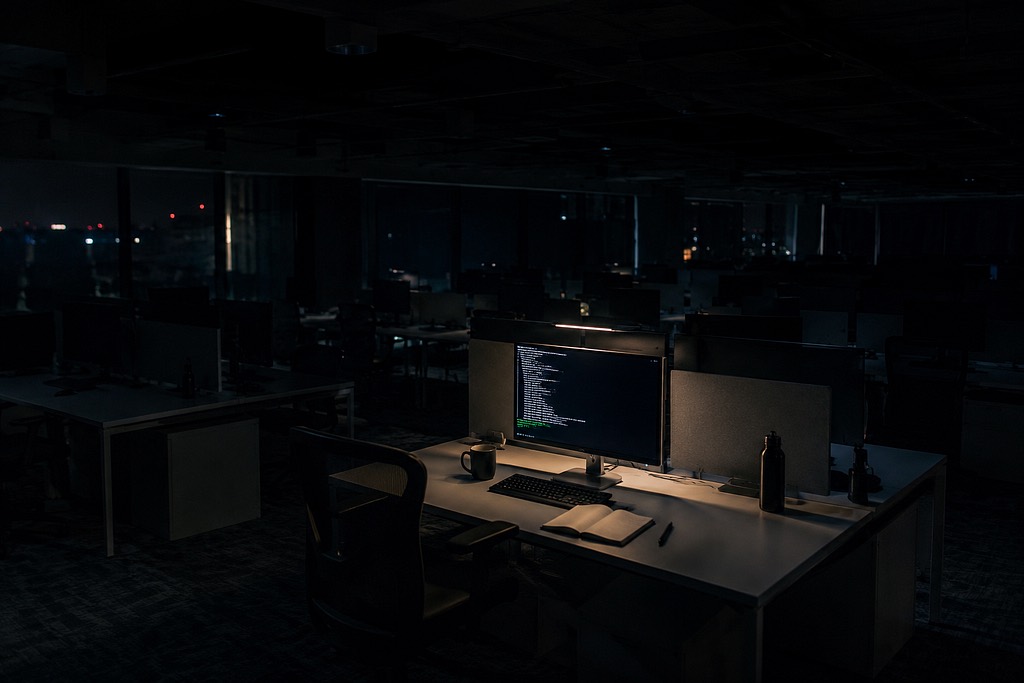
Some time ago, I shipped one of the best pieces of engineering I've done in my career. A flow that took 20 seconds now took 2. I had spent nights on it: profiling, reading, throwing away two approaches before finding the right one.
I pushed it, watched it work in production, and did what I've always done in that moment. I looked up to tell someone.
And I realized there was no one to tell.
Not literally. There were people around, good people. My CEO would have said "great work" and meant it. But nobody in the room could feel the difference between 20 seconds and 2. Nobody would ask how. And a "great work" from someone who can't tell whether the work is great weighs almost nothing. I learned that the hard way.
To explain why that moment hurt, I have to go back to the room that built me.
The room that built me
I started as a software engineer in 2021, at SHL. Early on I did what most freshers do: took tickets, wrote code, closed tickets. Then at some point I started sneaking into rooms I wasn't required to be in. Technical meetings, architecture discussions, debates between people far senior to me.
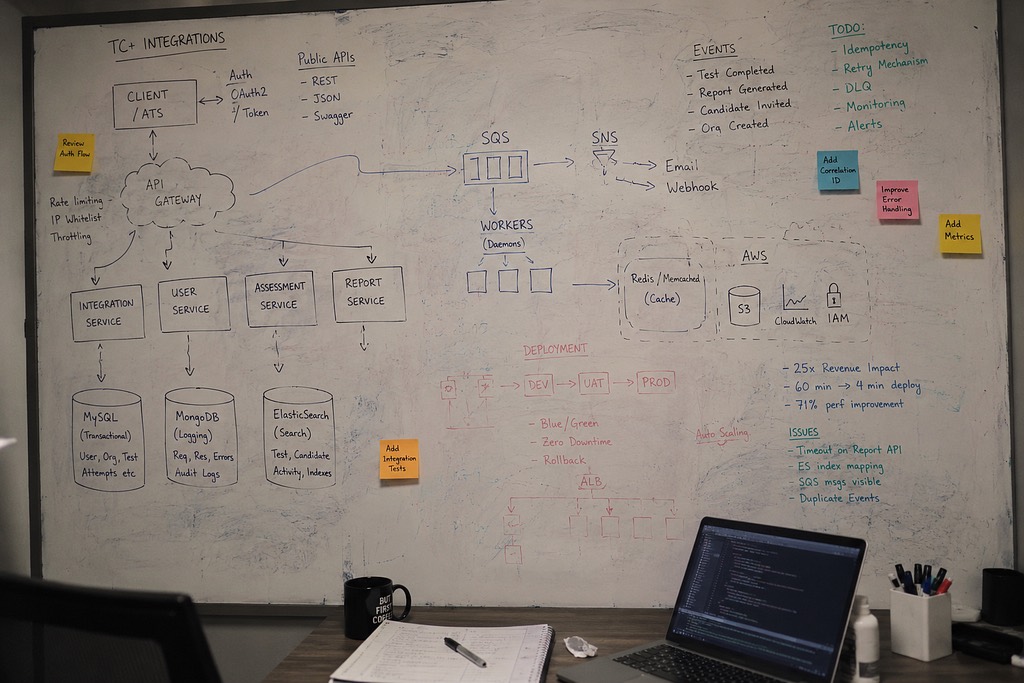
That's where my education actually happened. Not in writing code, but in watching smart people disagree about how to solve a problem. I discovered there are ten ways to solve anything, and the interesting work is choosing between them. So I started reading, researching, coming to those discussions with opinions. Sometimes wrong ones. The seniors would take my idea apart, and I'd go back, learn more, and return with a better one.
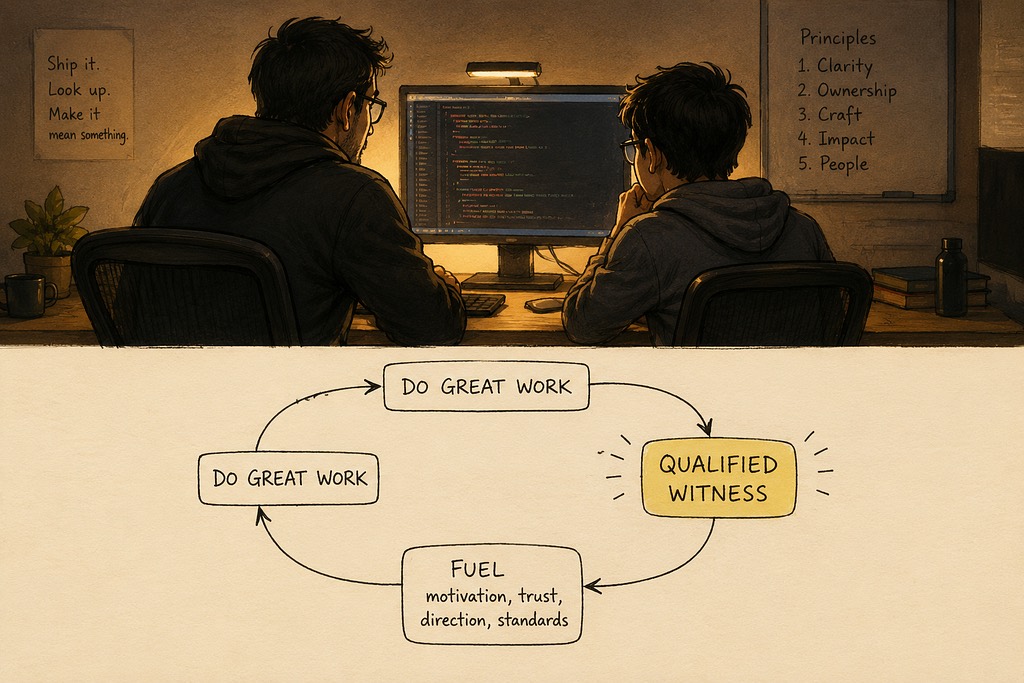
Somewhere in that loop, I found my fuel, and I'll be honest about what it was:
I wanted the smartest people in the room to be impressed.
That was it. Not promotions, not appraisals. When someone whose brain I respected looked at my solution and said "okay, that's actually good", that sentence could power me for a month. I stopped counting hours. I went far beyond my role. And it paid off, in growth, in reputation, in the kind of ownership people started trusting me with.
We're taught to be embarrassed by this. Real engineers, the mythology says, are intrinsically motivated. They'd write beautiful code alone on a desert island. I don't believe that anymore. Psychologists who study motivation (Deci and Ryan's self-determination theory) list competence as a basic human need, but here's the detail everyone misses: feeling competent requires feedback from someone qualified to judge. Brian Eno has a word for what I had at SHL: scenius, the communal form of genius, a scene where "risky moves are applauded and subtlety is appreciated."
Subtlety is appreciated. Remember that phrase. It's the whole essay.
What I thought I was carrying with me
By the time I left SHL at the end of 2024, I believed the fuel was mine. I had the work ethic, the ownership, the habit of going deep. I even preached it to my juniors: to have more, you have to do more. If you're learning something, go out of your way. Spend the hours, do the hard version.
I thought I was a self-contained engine.
I was a fire, and I had mistaken myself for the fuel. The oxygen was the room.
The room goes quiet
I joined a small Korean startup. New culture, new rhythms, new everything. It took me a few months just to find my footing. But the proving mindset did its job: I worked hard, built trust, built relationships, shipped real features and solved real problems.
And slowly, a strange hollowness crept in.
I'd solve something genuinely hard, the kind of thing that would have sparked a forty-five-minute discussion at SHL, and it would land in silence. Not hostile silence. Just the silence of people who care about outcomes and not how. The feature works? Great. Next.
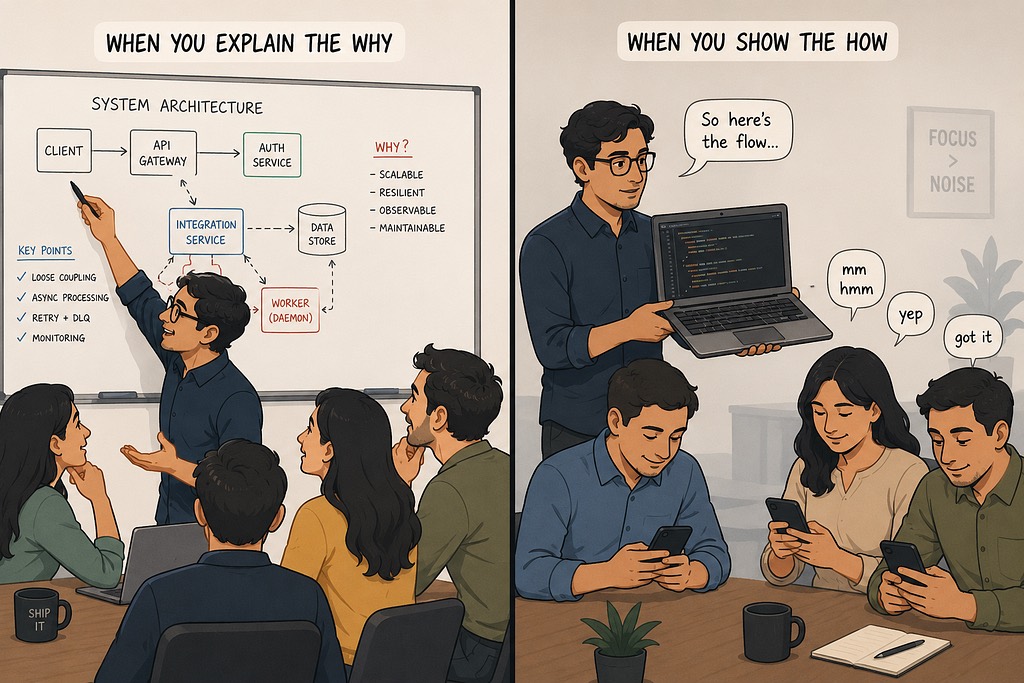
I want to be careful here, because this is not a complaint about my colleagues, then or now. They were good people building a business, and caring about business outcomes is correct. The problem wasn't them. The problem was a mismatch I didn't have a name for yet: I had optimized my entire motivation system around an audience that could judge craft, and then moved somewhere that audience didn't exist.
I flew to Korea for an on-site stint hoping proximity would fix it. It didn't. I changed companies again. Now I work with a CEO who genuinely values me. He calls me one of his most important engineers, gives me room, listens to my vision for the product. He knows I'm good.
But he knows it the way you know a surgeon is good: by reputation and results, not by watching the hands. When I take something from 20 seconds to 2, he's happy the users are happy. He cannot feel the elegance. And I've learned that being valued and being seen are two different hungers, and only one of mine is being fed.
Then AI made every room quiet
Here's where my small personal problem became everyone's problem.
When AI coding agents arrived, something shifted that I haven't seen anyone say plainly: the audience for engineering craft collapsed further, just as the craft got harder to see.
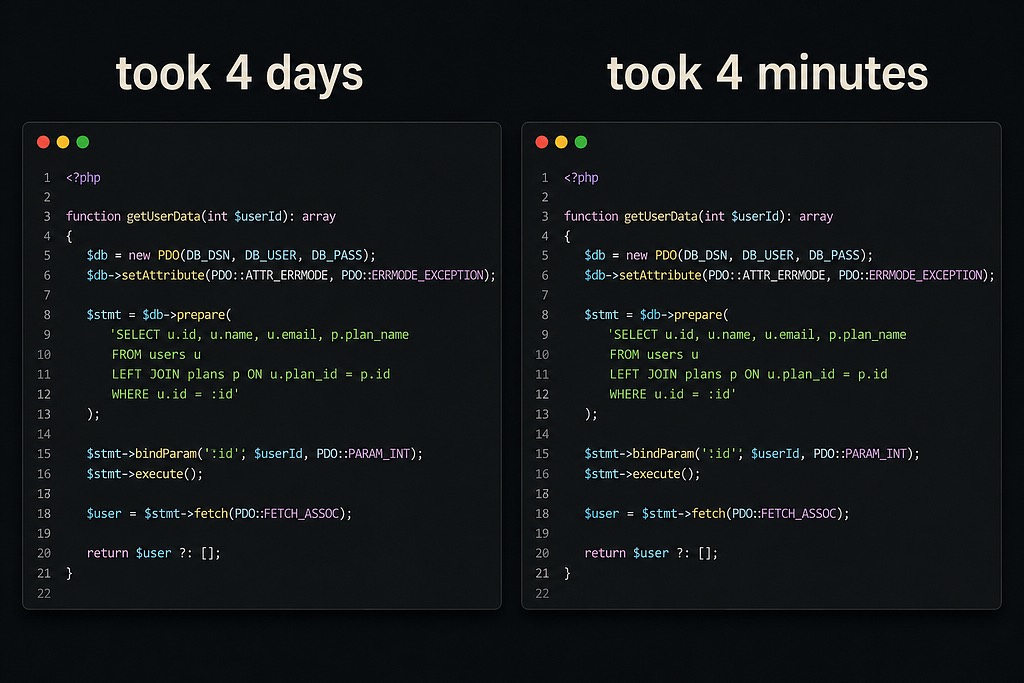
It used to be that shipping something hard was visible. The output itself testified to the skill. Now anyone can generate plausible-looking output in minutes. To a non-technical observer, my four days of careful engineering and an agent's four minutes of confident generation look identical. The signal is gone. The only people left who can tell the difference between generated-plausible and engineered-correct are other serious engineers.
Which means the thing I lost when I left SHL, a room full of qualified witnesses, is the exact thing every craft-driven engineer is now losing at once. I've read the essays calling this an "identity crisis" in software engineering. I think the diagnosis is slightly off. The crisis isn't that AI writes code. It's that mastery has always needed witnesses, and the witnesses are disappearing.
If you've felt weirdly deflated lately despite doing the best work of your life, this might be why. It's not burnout. It's playing to an empty theatre.
What I'm doing about it
I don't have this solved. But naming the problem changed what I optimize for, and two things are already true:
- I'm learning to become my own critic, because the loop has flipped. Here's what nobody tells you about growing in this career: the higher you go, the fewer people there are above you to impress. That's not a bug, that's the design. At some point the judge has to move inside. So now, when I finish something, I sit with it and ask the questions those SHL seniors would have asked: is this actually good, or does it just work? What would they have torn apart? I've internalized their voices, and I hold my work to that standard even when nobody's checking.
And the loop hasn't ended, it has flipped. To my juniors, I am now the smartest person in the room. I'm their SHL senior. When they go out of their way and build something subtle, I'm the one whose "okay, that's actually good" powers them for a month. That's a responsibility I take seriously now, because I know exactly what that sentence is worth. The fuel I've been missing? For someone, I am that fuel. Refusing to pass it on would be the real waste.
- I'm rebuilding my scenius outside the office. The witnesses don't have to sit next to you. They can be a community, a group of ex-colleagues, engineers on the internet who care about the same subtleties. This essay is, honestly, part of that. Writing publicly is me looking up from my desk to tell someone, at scale.
Twenty seconds to two. It's still one of the best things I've built. Most people who benefit from it will never know it happened, and I've made peace with that. Users aren't supposed to see the craft.
But somebody should.
So here's the question I now ask about every job, every project, every room, and the one I'll leave you with:
Who do you show your work to?
If you sat with that question a second too long, we probably belong to the same tribe. Find your witnesses. And when you can't find them, be one.
If this hit something, I'd genuinely like to hear your version of it, especially if you're the "smartest person in the room" and it's quieter than everyone promised. Find me at divyanshdixit.com.